Insights · 12 min read
How to Source Custom Apparel from China: A Complete Buyer's Guide
Sourcing custom apparel from China is not complicated, but it is full of places where a first-time buyer loses money without realising it — paying for weight that does not solve their problem, approving a sample that cannot be repeated at volume, or discovering a durability issue after the goods have shipped. This guide walks through the whole process in the order it actually happens, with the specific numbers and questions that matter at each stage.
What you are actually buying
When you place an apparel order from China you are buying three separate things: fabric, construction and execution. They are priced separately and they fail separately. A brand that chooses a fabric supplier on price alone often discovers the failure later in construction — a jersey that was fine on the roll behaving differently once cut and sewn at a particular tension. Understanding that these are three decisions, not one, is the single biggest difference between a buyer who has a repeatable product and one who has a story about a bad first order.
Factory or trading company
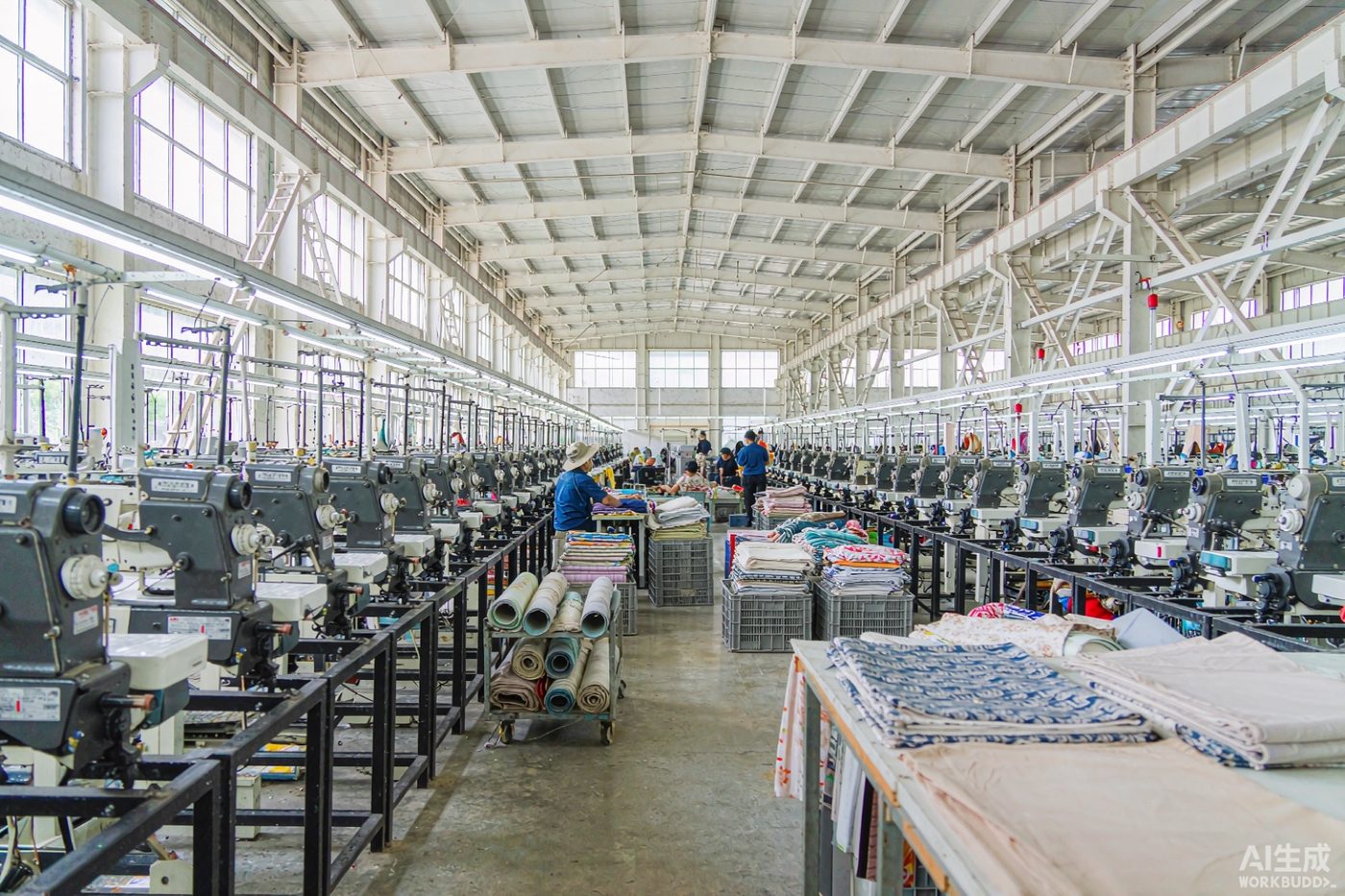
A trading company quotes you a price and finds a factory. A factory quotes you a price and makes the goods. Both can work, but they fail differently. A trading company is easier to talk to and often has a wider product range, because it is not limited by its own machinery — the risk is that technical questions bounce, and you never know which workshop actually produced your order. A factory can answer a construction question in a day and give you a consistent output across repeats, because the same lines and the same pattern room handle every order. The way to tell them apart is simple: ask who cuts the fabric and where. If the answer is vague, it is a trading company.
Writing a tech pack that gets an accurate quote
The quote you receive is only as good as the specification you sent. A tech pack does not need to be beautiful; it needs to be complete. At minimum it should give: the garment type and reference, the fabric weight in gsm and composition, the colour (a Pantone code, not a photo), the size run and measurements, the decoration (method, placement, number of colours, and artwork), the labels and packaging, and the target quantity. When one of these is missing, the factory either guesses — which risks a wrong quote — or quotes wide to protect itself. Buyers routinely complain that quotes come back expensive; more often the quote is simply pricing the uncertainty the brief left open. If you do not have a tech pack yet, send a reference garment and a swatch and build the specification with the factory.
Sampling: the stage that decides everything
A sample has two jobs, and buyers usually only watch it do one. The obvious job is to show you what the garment looks like. The less obvious, more important job is to prove the specification can be produced repeatably. A sample made by hand in a sample room, at a slower pace and with more supervision, can be flawless while the same specification fails in bulk. This is why the sample should be approved as a sealed reference — measurements recorded, fabric and trims confirmed — rather than simply photographed and filed. Sampling typically takes 7–10 days after fabric and specification are confirmed; rushing it is a false economy, because everything after it depends on the specification it locks in.
MOQ: what the number really means
Minimum order quantity is not arbitrary. It is derived from the cost of setting up a production line: booking cutting time, setting a sewing line, and — the largest factor — the minimum a fabric mill will dye. A mill may require, for example, a few hundred kilograms per colour, which translates into a minimum number of garments. This is why MOQ is usually quoted per colourway: two colours of the same style is two fabric lots. It is also why a factory can sometimes hit a lower minimum on fabric it already holds as stock. A realistic first-order MOQ for a mid-weight tee from a Chinese factory is in the region of 500 pcs per colourway — below that, one-off and small-batch services exist, but the unit price reflects the setup cost being spread across very few pieces.
The cost drivers, in order of impact
Buyers often look for savings in the wrong place. In descending order of effect, the main cost drivers are: fabric (weight and fibre — organic cotton and heavier weights both carry real premiums), quantity (setup cost amortised across the run), colour count and colourways (each is a separate dye lot), decoration (number of print colours, stitch count for embroidery, number of placement positions), construction complexity (extra panels, linings, special closures) and packaging (custom polybags and hangtags). A common mistake is trying to negotiate the unit price of a simple tee when the real lever is consolidating colourways — four colours at 500 pcs each costs far more than two colours at 1,000 pcs, for the same total output.
Quality control and the AQL standard
Quality is decided in the process, not in the final inspection — but the final inspection is how you verify the process held. The industry standard is AQL (Acceptable Quality Limit), most commonly AQL 2.5 for garments, covering measurements, workmanship and decoration adhesion on a statistically sampled basis. Two things make an inspection meaningful: it must happen before the balance payment and shipping, and it must check against the approved sample rather than a general impression. A trustworthy factory will run this inspection without being asked and supply the report with the shipment. Third-party inspection services are widely available if you want a party independent of the factory; they typically cost a few hundred dollars per man-day, which is cheap insurance on a first order.
Payment terms and how to protect yourself
The standard arrangement for a first order is a deposit against production, balance against a pre-shipment inspection report — commonly 30% / 70%, paid by T/T. This structure aligns both sides: the deposit funds fabric and cutting, and the balance is released only once you have evidence the goods are correct. Be cautious of any request for full payment up front, and equally cautious of a factory that will not accept a specification-linked inspection before the balance. Incoterms matter here too — FOB (you arrange freight from the Chinese port), CIF (the factory arranges freight and insurance to your port) and DDP (fully delivered, duty paid) shift cost, risk and paperwork between the two of you. For a first order, FOB with your own forwarder gives you the most visibility.
Shipping and documentation
Sea freight is the default for bulk apparel: a few weeks door to door, and the cheapest per unit. Air freight is used for samples and urgent top-ups, at several times the cost. You will need a commercial invoice, a packing list, a bill of lading for sea freight, and a certificate of origin if your destination offers preferential duties under a trade agreement. If your product carries a sustainability claim such as organic cotton, the mill certificate should travel with the order so the claim is substantiated at customs and with your own customers.
What to do before you commit
Before sending a deposit, five things are worth doing. Ask for the specification in writing — fabric, weight, composition, decoration — and confirm it matches what you believe you ordered. Approve the sample as a sealed reference with recorded measurements, not as a photo. Agree the inspection standard and timing in advance, before the balance payment is on the table. Confirm the Incoterm and who arranges freight. And start smaller than you think you should — the purpose of a first order is not to cover your season, it is to verify that this factory can produce your product repeatably. Everything after that is a reorder, and reorders are where the economics actually work.